

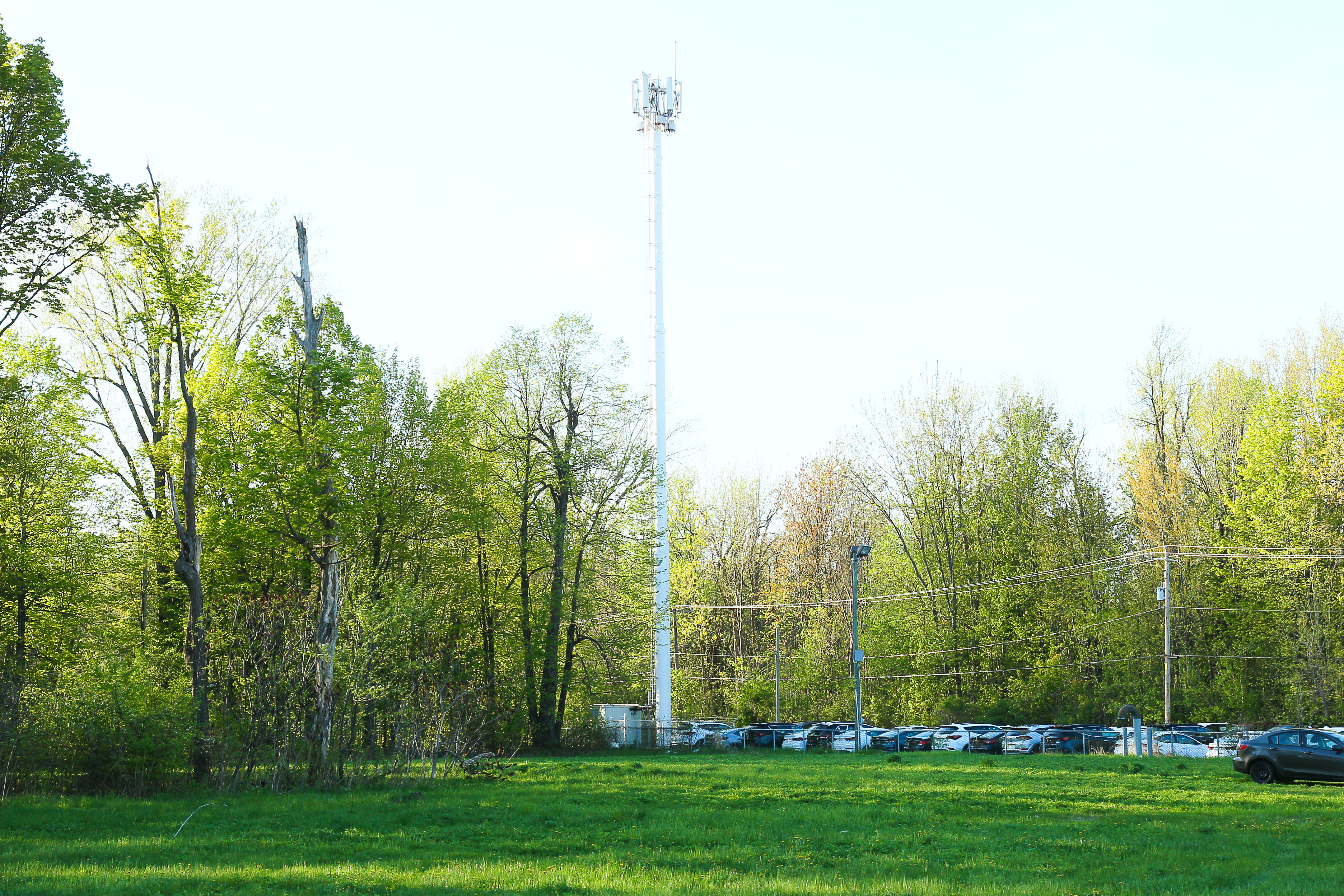
(English follows) Les élus de la Ville de Châteauguay ont tourné ce qui semble être la dernière page de la saga judiciaire qui a opposé pendant huit ans la Ville de Châteauguay à la compagnie Rogers Communications, dans une cause concernant les pouvoirs municipaux en matière d’aménagement du territoire.
Le conseil a voté, lors de sa séance ordinaire du 16 avril, pour un règlement de «transaction et de quittance», lequel a pour effet de libérer le terrain situé au 51, boulevard Industriel. Ce terrain avait été exproprié par la Ville en 2008, afin d’offrir à Rogers Communications une alternative pour ériger sa tour de télécommunications. «On avait exproprié le terrain de Mme White, maintenant on lui redonne, a expliqué le maire Pierre-Paul Routhier. J’espère que c’est la fin de cette saga qui a coûté à la Ville près de 600 000$» a-t-il exprimer ensuite.
Tour déjà construite
Rogers Communications, après sa victoire contre Châteauguay en Cour suprême, a finalement érigé sa tour de télécommunication à l’endroit qui avait été choisi avant le début de la saga judiciaire. Soit sur un terrain situé au 411, boulevard Saint-Francis. La tour y est construite «depuis environ un an», précise Marie-Claude Tremblay, directrice des communications à la Ville de Châteauguay.
Rappel des faits
Le litige a commencé en 2007 quand Rogers a décidé d’ériger une tour sur le terrain du 411, boulevard Saint-Francis, après avoir reçu l’approbation du ministre fédéral de l’Industrie en vertu de la Loi sur la radiocommunication.
En réponse aux inquiétudes des citoyens du secteur, qui craignaient des risques pour leur santé, Châteauguay a d’abord proposé un autre terrain à Rogers. Mais la lenteur du processus d’expropriation nécessaire à ce déplacement a découragé la compagnie, qui a décidé de revenir au terrain d’origine.
Châteauguay a alors appliqué une réserve foncière sur le terrain du boulevard Saint-Francis, ce qui a eu pour effet de bloquer le processus. Cette manœuvre a été contestée par Rogers en justice. La Cour supérieure lui a donné raison, puis la Cour d’appel du Québec a tranché en faveur de Châteauguay. Ce verdict aura finalement été renversé par les juges de la Cour suprême en juin 2016. La défense assurée par la Ville pendant ce long processus judiciaire a coûté près de 600 000$ aux contribuables châteauguois.
Chateauguay closes Rogers Communications file
Chateauguay City Council has turned what seems to be the last page of the judicial saga that opposed the City to the Rogers Communications company for eight years, in a case regarding the municipal powers in the matter of the layout of the territory.
At its regular monthly session of April 16, Council voted for a bylaw of ‘’transaction and discharge,’’ which has the effect of freeing up the land located at 51 Industrial Blvd. This lot had been expropriated by the City in 2008, in order to offer Rogers Communications an alternative for erecting its telecommunications tower. ‘’The City had expropriated the land belonging to Mrs. White, and now we are giving it back to her,’’ explained Chateauguay Mayor Pierre-Paul Routhier. ‘’I hope this is the end of this saga which cost the City nearly $600,000,’’ he added.
Tower already built
Rogers Communications, after its victory over Chateauguay in Supreme Court, finally erected its telecommunications tower at the spot which had been chosen before the start of the legal proceedings. The tower was constructed on a lot situated at 411 St. Francis Blvd., ‘’about a year ago,’’ confirmed City communications director Marie-Claude Tremblay.
Recalling the facts
The litigation began in 2007 when Rogers decided to erect a tower on the land at 411 St. Francis Blvd., after having received the approval of the Federal Industry Minister according to the law on radio communication.
In response to concerns from some citizens from that sector, who feared health risks, Chateauguay first proposed another lot to Rogers. But the slowness of the expropriation process necessary for this displacement discouraged the company, which decided to return to the original lot on St. Francis, which had the effect of blocking the process.
This maneuver was contested by Rogers in court. The Superior Court ruled in Rogers’ favour, while the Quebec Court of Appeal ruled in Chateauguay’s favour. This verdict would be finally reversed,
Chateauguay then applied a real-estate reserve by the Supreme Court judges in June 2016. The defence, assured by the City during this long legal process, cost Chateauguay taxpayers close to $600,000.
(Translation Dan Rosenburg)